A polished concrete terrace can become slippery, especially when wet, with green deposits or ice. Good drainage helps, but does not automatically make the floor slip-free. When choosing a concrete terrace, we therefore consider the finish, the usage, and the connection to the garden and house together.
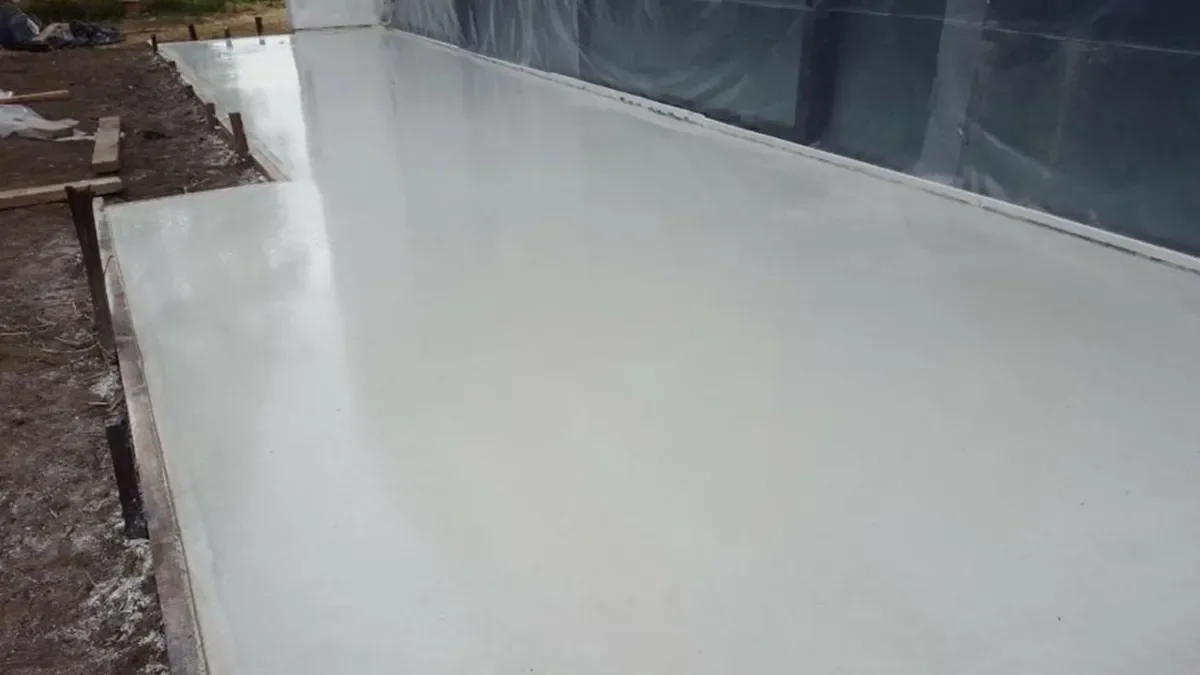
Is polished concrete slippery outdoors?
The slipperiness does not depend solely on the material. The surface finish, contamination, water and footwear also play a role. A smoothly finished terrace can be pleasant to clean, but requires a different consideration than a rougher outdoor paving. Especially with a slope, a swimming pool or a heavily used passage, grip deserves attention before execution.
Viewing a dry floor alone is not sufficient to assess how it behaves in the rain. Discuss where people walk, where water collects, and how the terrace is used. For a specific slip resistance requirement, the chosen finish must be evaluated accordingly; the word ‘antislip’ alone is not a measurement result.
Drainage
Determine in advance the heights, the drainage direction, and the point where the rainwater will be discharged.
Finishing
Choose the surface texture based on use, appearance and maintenance.
Maintenance
Remove leaves, dirt and green deposits in time. Even a well-constructed terrace requires maintenance.
A polybeton terrace: from preparation to finishing
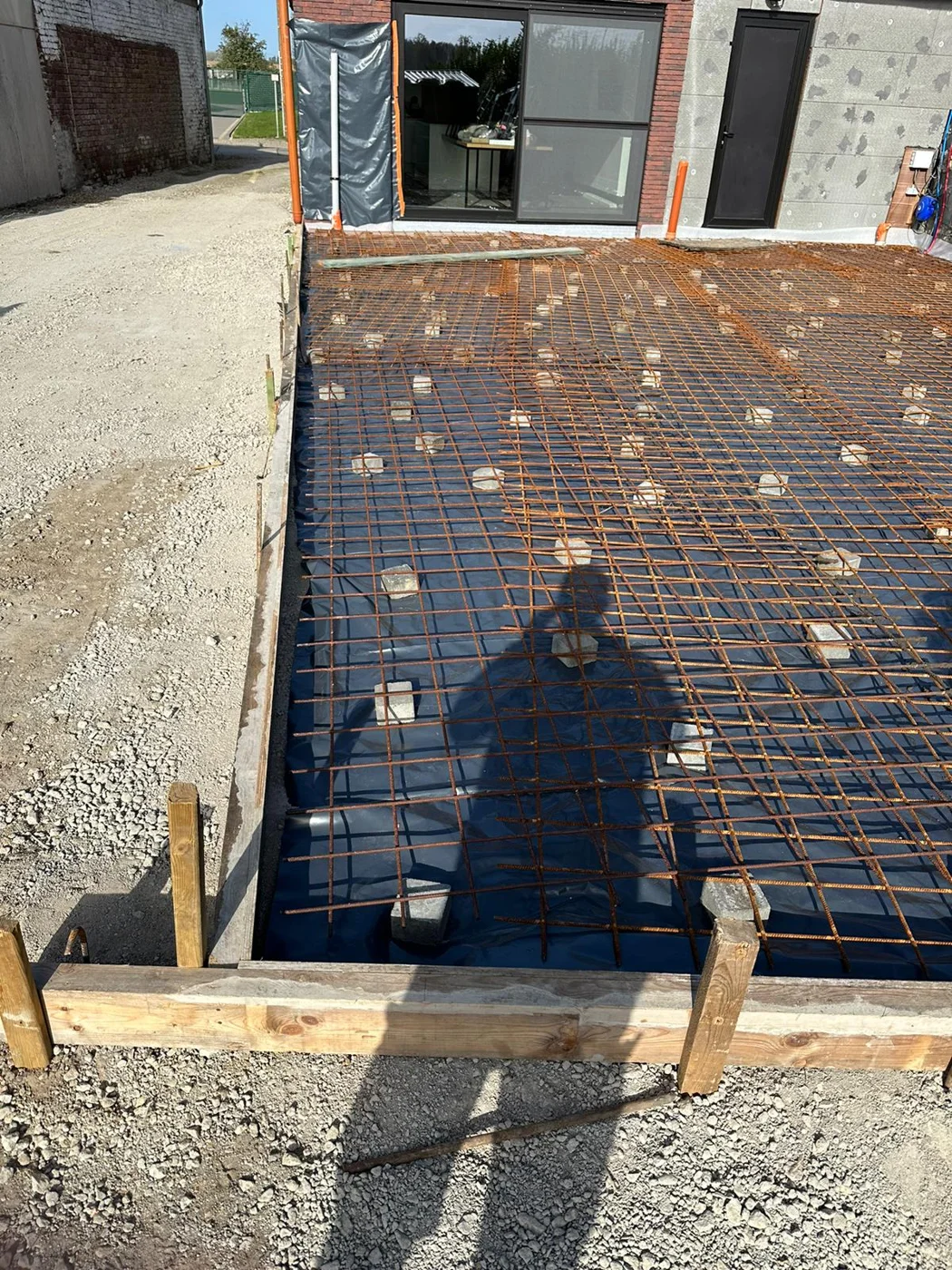
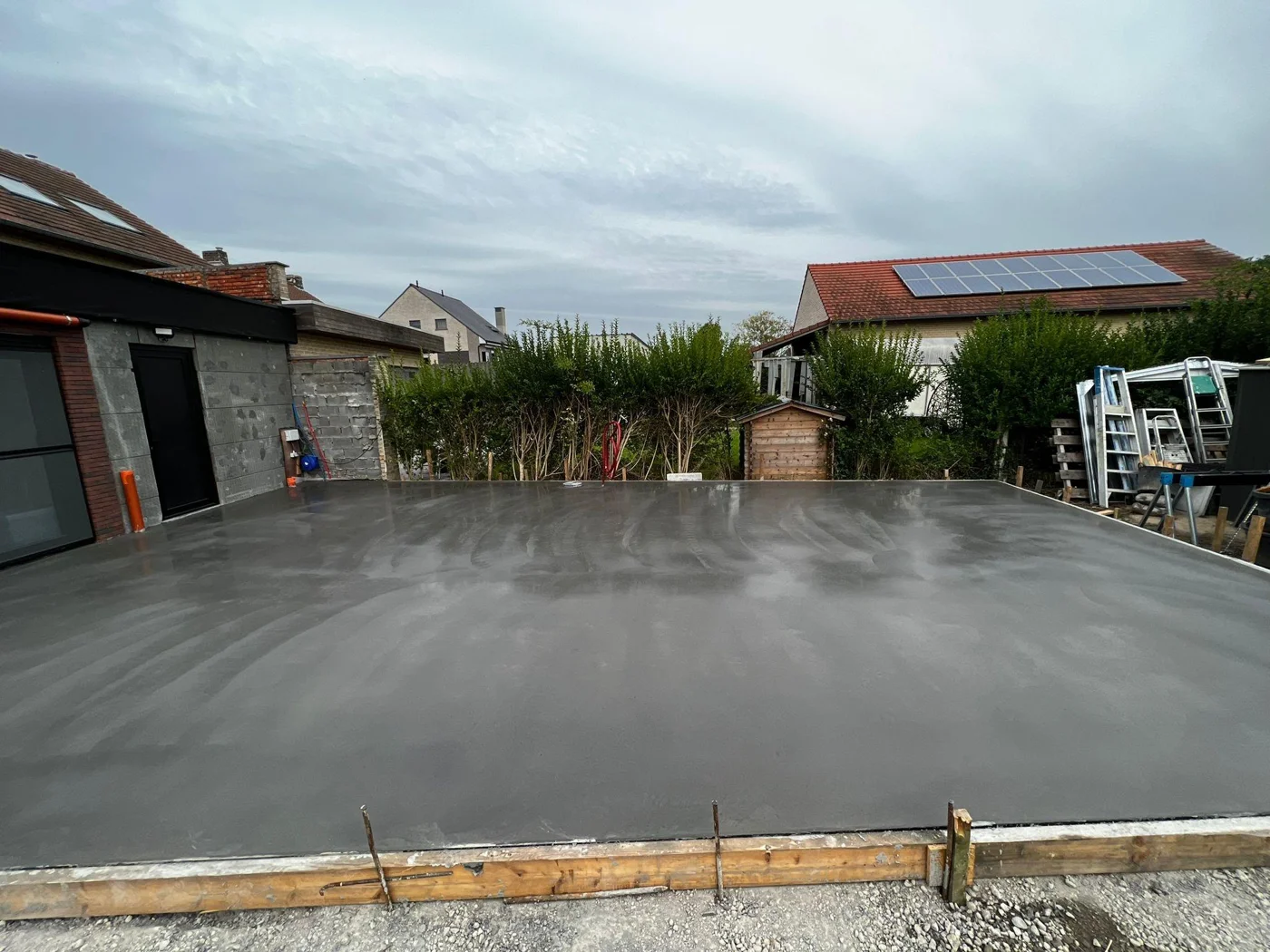
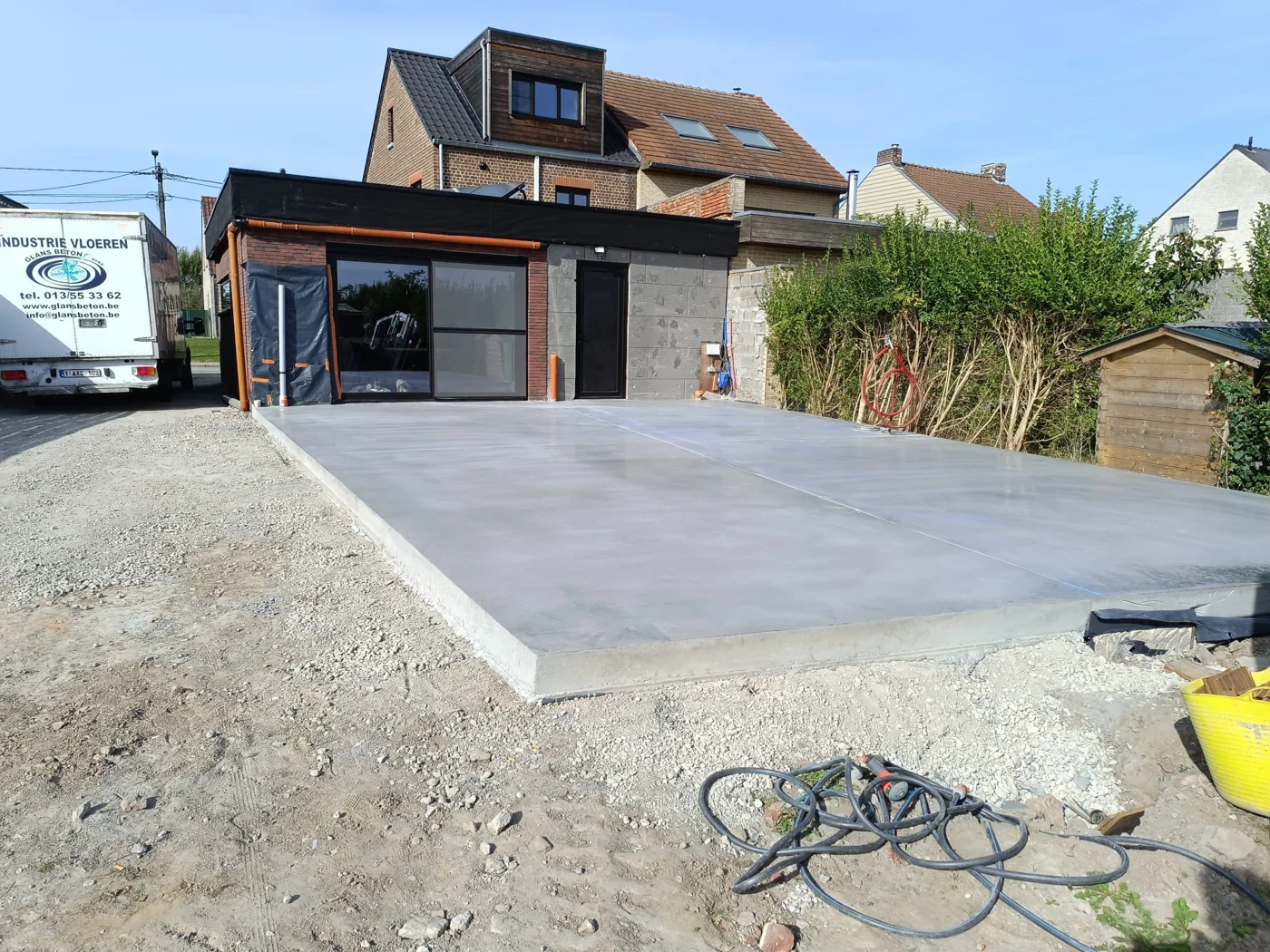
These images show the same terrace in different execution phases. In the preparation photo, the formwork and reinforcement mesh are visible; the other photos show the concrete after finishing. This shows how much work precedes the visible surface.
The photos are an example of the execution, not proof of a specific slip resistance. You must assess that based on the chosen finish and the use, also when the terrace is wet.
View the terrace in the video.
 ▶ Watch the terrace video of Glansbeton
Also read how we corten steel as formwork and visible edge discuss. The correct edge finishing, connection and drainage are developed before pouring.
Adequate drainage starts with the design
The slope of the concrete slab must fit the thresholds, facades and drainage provisions. Determine the heights before the formwork is placed. Also check whether the water can actually continue after leaving the terrace: a slope towards a closed edge does not solve the problem.
We agree on the required slope before the concrete design. A slab that appears flat does not have to be horizontal. The goal is a usable terrace on which water can flow to the intended drain. Even with a good slope, a wet surface and winter conditions require attention.
Smooth power-trowelled concrete, brushing or washing out?
Polished concrete provides a calm, continuous surface with saw-cut joints. Those who want more texture can also consider another concrete finish. At brushed concrete a texture is deliberately applied to the fresh surface. In washed concrete the aggregates become visible.
No finish makes maintenance or drainage unnecessary. Moreover, a textured floor has a different appearance and requires an adapted cleaning method. Therefore, choose based on the complete situation and look at real installations, not just a small sample.
Frost and thaw salts: discuss the exposure
Outdoor concrete must be chosen for the conditions to which the floor will be exposed. A terrace and an indoor floor do not automatically have the same technical requirements, even if you want the same colour. The concrete composition, execution, and concrete curing must suit the application.
Buildwise describes that smooth finished, mechanically polished concrete floors can be more sensitive to frost. Limit the use of de-icing salts and ask in advance what winter care is recommended for your floor. A concrete class is not a guarantee that every top layer remains undamaged under all conditions. Read more about the choice and specification of concrete and concrete curing.
Installing a polybeton terrace: what do we discuss beforehand?
A terrace starts with a plan of the entire outdoor space. Where will the table be, the passage to the garden, and any drainage channels? With that information, we can coordinate the shape, heights, and execution. The following points belong to that preparation.
Substrate and floor construction
Check the load-bearing capacity and condition of the substrate, the available height, and the expected load. The thickness and reinforcement are adjusted accordingly. A general minimum thickness from an example is not a design for your terrace. Also indicate whether vehicles will need to drive over the concrete.
Edges, connections and joints
The formwork determines the shape and height. Connections to facades, thresholds and drains require a detailed design. Discuss the joint layout before pouring: a calm concrete surface does not mean the floor can be executed without technical joints.
Then follow delivery, pouring and compacting, finishing the surface, and the concrete curing. Coordinate accessibility for the concrete delivery and the machines. Also agree on when the terrace may be used and how it will be protected during the initial period. This depends on the execution and conditions.
What determines the price of a polyconcrete terrace?
Compare quotes for the same complete construction. A price per square metre alone says little when one quote includes groundwork or drainage and another only the concrete and the polishing.
- Surface and shape: many corners, separate sections and long edges require more preparation and finishing.
- Construction: groundwork, foundation, concrete volume and reinforcement also determine the amount of work and materials.
- Accessibility: the distance to the concrete mixer truck and any concrete pump affect the execution.
- Finishing: colour, edge details, sawing work and drainage provisions must be clearly included in the quotation.
Ask what is included, what is charged separately and how VAT is shown. See our explanation about the price of a concrete floor and the preparation and costs of a concrete pump for the factors we review together.
Polishing the terrace: images of the process
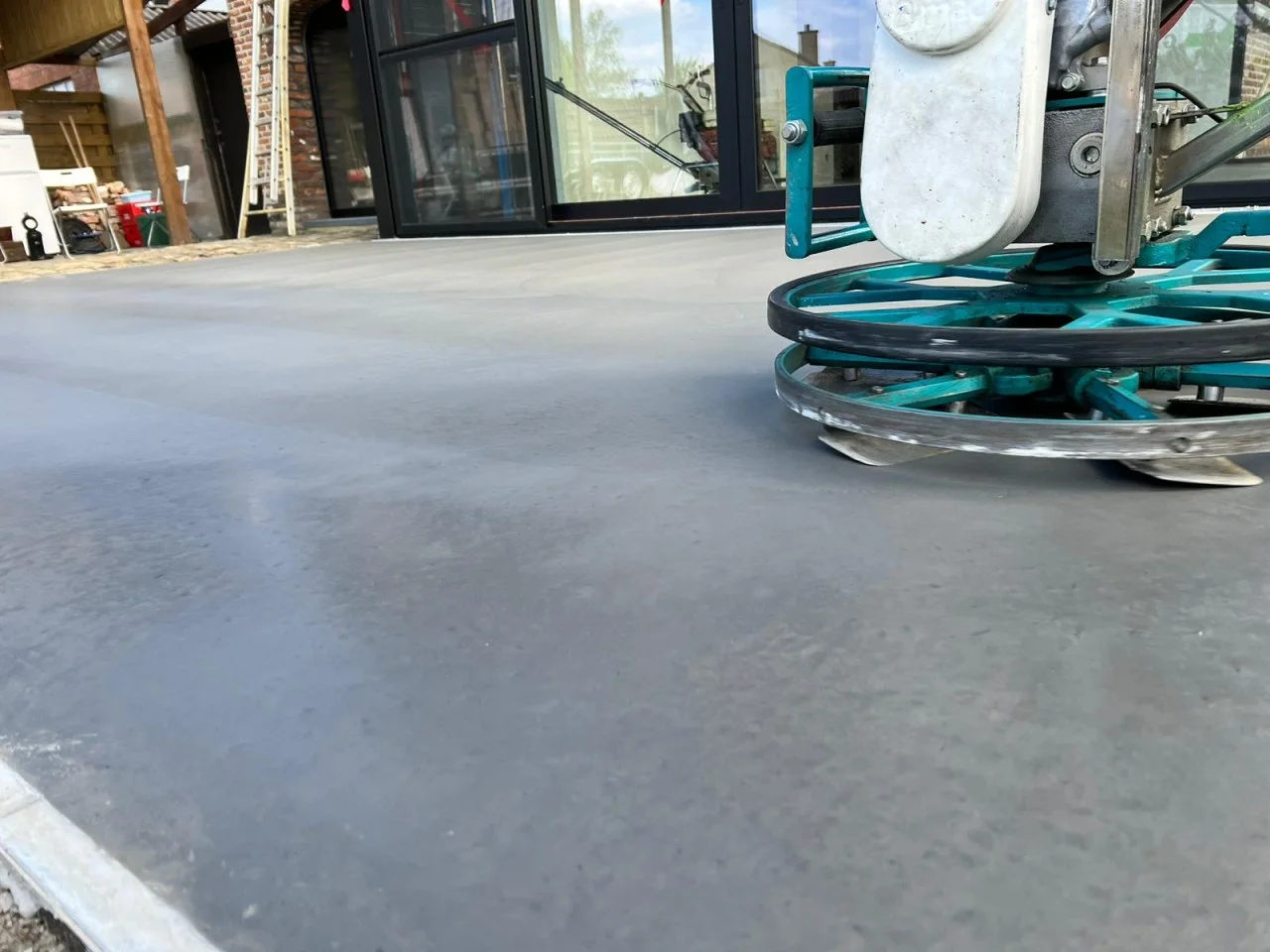
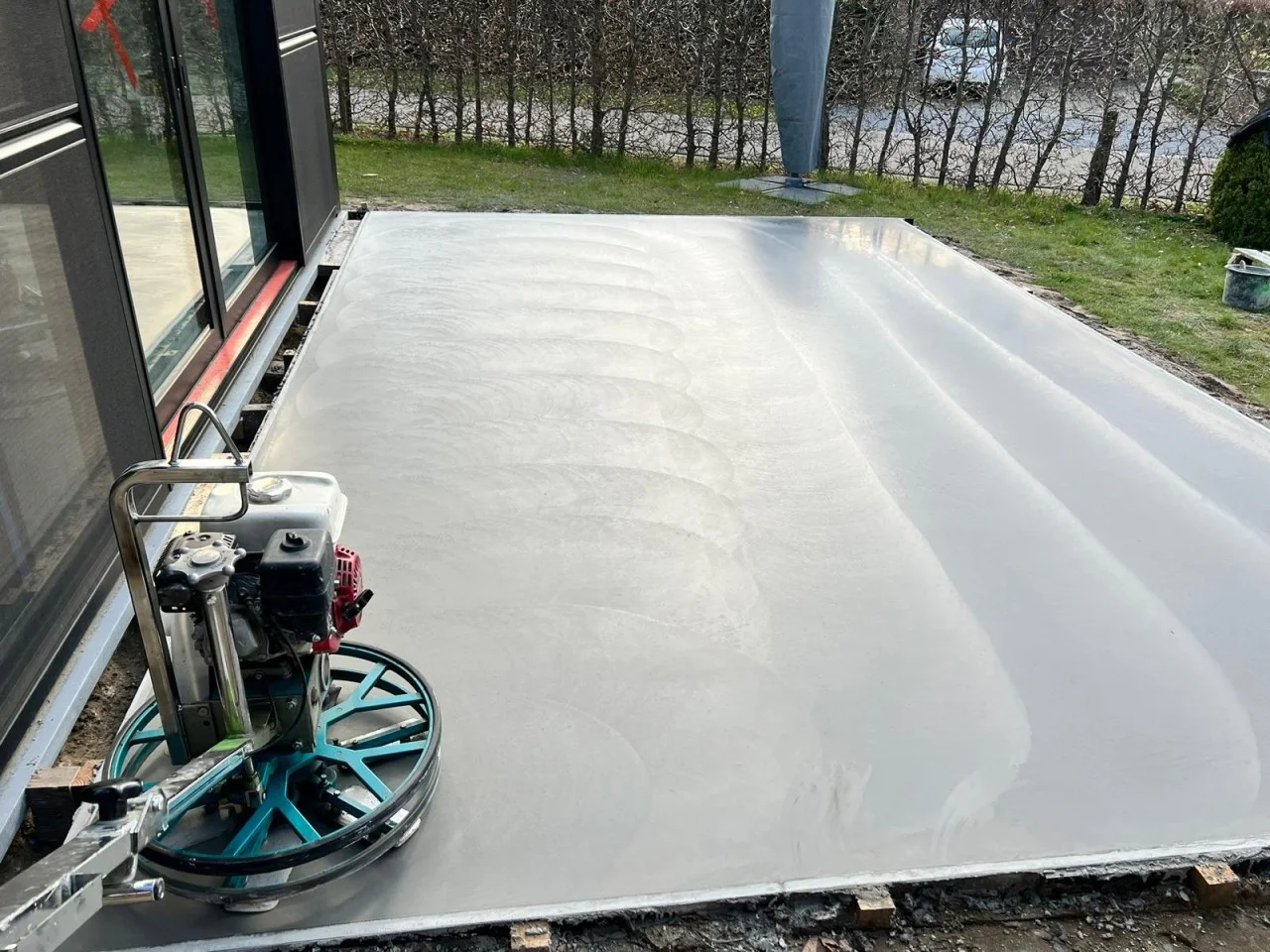
In these site photos, you can see the power-trowelling machine on the fresh concrete, with the facade and garden in the background. The finishing is done during the setting phase. You assess the result later: the colour and gloss during the work are not yet the final floor appearance.
The shape of the terrace around the house
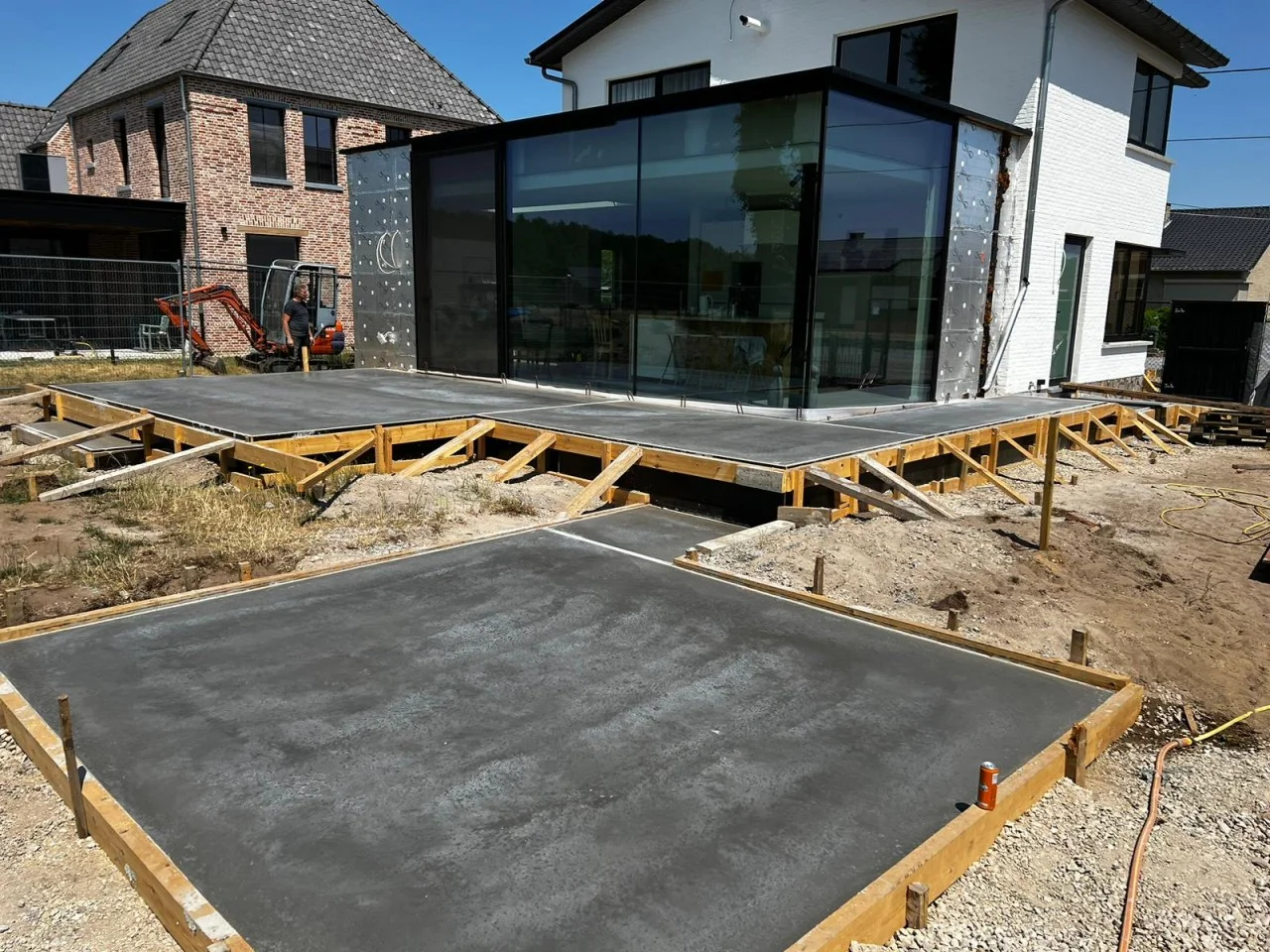
The overview image shows how the concrete slabs connect to the facade and how the wooden edge formwork secures the outer edges. Temporary braces hold the formwork in place during execution. Corners, transitions, and heights must therefore be clear before pouring. Read more about formwork for concrete.
How do you maintain a concrete terrace?
Sweep away loose dirt and leaves and use a cleaning method that suits the finishing and any protection. Do not allow green deposits to build up indefinitely. For stubborn dirt, seek advice before applying an aggressive product or intensive cleaning.
Quickly clean up grease from the barbecue and other spilled substances. Concrete can absorb liquids; a stain does not necessarily disappear on its own. Suitable protection can support maintenance but must be tailored to the concrete and outdoor use. On the page impregnate concrete floor you can read more about that distinction.
Technical background: Buildwise, Contact 2014/3: frost resistance of concrete..
Is a polished concrete terrace slippery?