Ordering concrete?
Start with the right preparation.
How much concrete do you need, what composition do you specify and is a pump required? Prepare your delivery step by step.
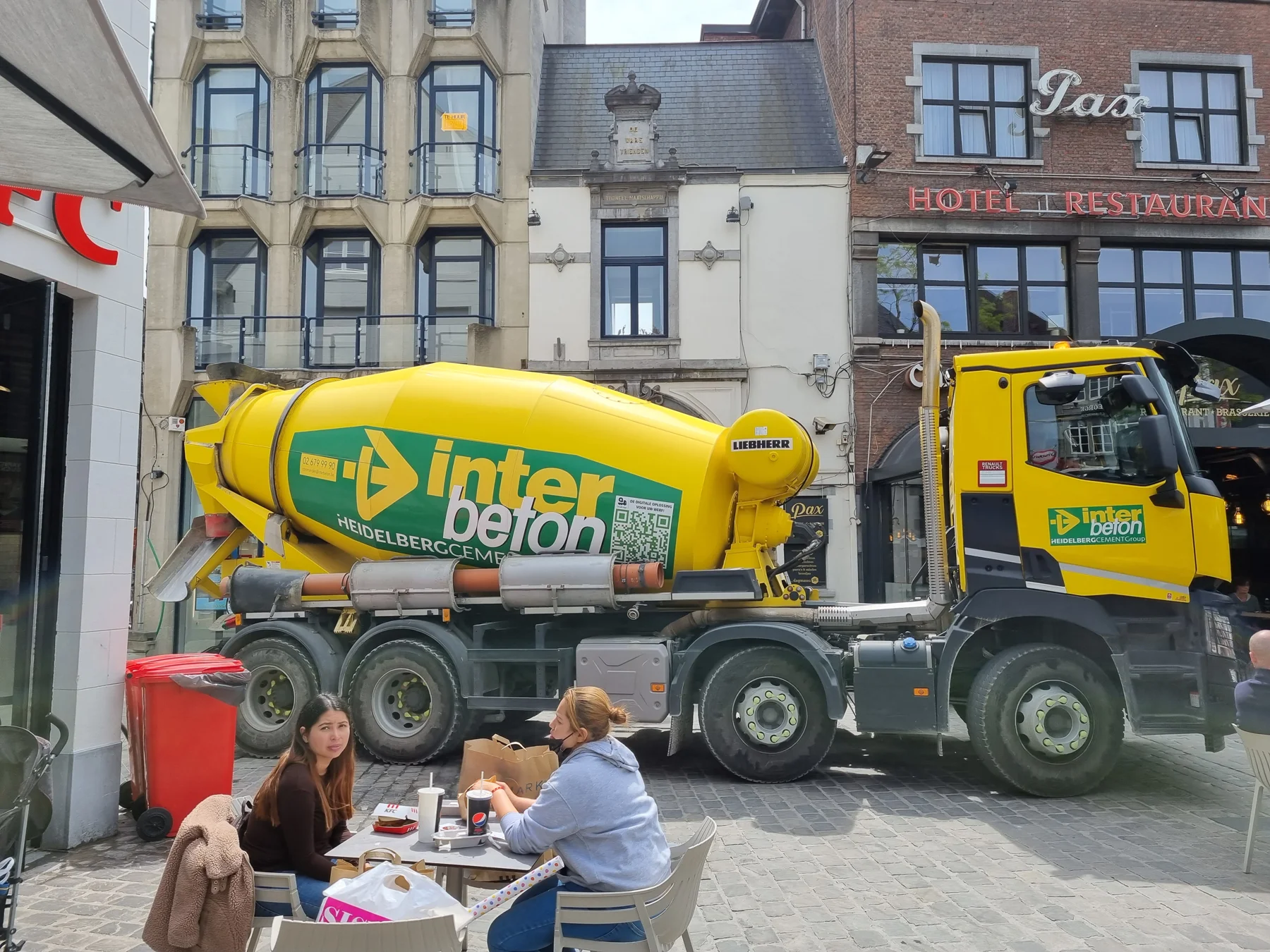
Ordering concrete starts before the pouring day
A concrete order involves more than just a number of cubic metres. The plant needs to know what concrete you need, how it will get to the right place and when the team is ready to process it. By making these arrangements in advance, you avoid missing information on the day of pouring.
Which concrete?
Take the data from the construction plan. Also discuss the finish, colour and any fibres with the contractor.
How much concrete?
Measure the surface area and thickness. Calculate the net volume and keep the ordering reserve visibly separate.
How does it arrive on site?
Provide accessibility details and agree whether a concrete pump is needed. Then confirm the schedule.
Which concrete should you order?
Provide the full composition. Mentioning only C35/45 is not sufficient: the environment, fluidity and aggregate size must also be included.
| Given | Meaning | Example |
|---|---|---|
| A · Strength class | The compressive strength of the concrete. | C35/45 |
| B1 · Use | Reinforced, unreinforced or prestressed concrete. | GB = reinforced |
| B2 · Environment | Exposure to moisture, frost and de-icing salts. | EE4 |
| C · Fluidity | How easily the fresh concrete can be worked. | S4 |
| D · Grain size | The largest aggregate in the concrete. | 16 mm |
| E · Additional requirements | Agreements on, among other things, cement, colour, fibres and pumpability. | According to your construction plan |
C25/30, C30/37 or C35/45?
These codes indicate the strength class. They do not by themselves say everything about the composition or suitability for your floor. Two quotes with the same strength class can, for example, differ in cement type, fluidity or aggregate size. Therefore, compare the full description and adopt the required combination from your plan.
S4, cement, colour and fibres
S4 describes the consistency of the fresh concrete. Coordinate the fluidity with the team placing and finishing the concrete. Also specify additional choices such as the type of cement, a colour or fibres. For coloured concrete, the colour name and dosage are part of the agreement; for fibres, the type and quantity. This allows the plant to prepare a targeted quote.
Reinforced concrete: concrete and reinforcement work together
For our standard choice of a reinforced concrete floor, the use domain B1 is on GB: reinforced concrete. The strength class (A) and the environmental class (B2) remain separate data in the order.

The reinforcement is determined according to the structural design. A higher concrete strength does not replace the required reinforcement. The illustration is a diagram, not a reinforcement plan.
Fluidity, grain size and additional requirements explained
Fluidity: slump test or flow test?
The consistency describes the behaviour of fresh concrete during processing. The slump test measures how much the concrete subsides after the Abrams cone is removed. The shake test measures the spread on a shaking table. These are different test methods; the associated designations are not interchangeable.
In addition to a consistency class, a guideline value for the slump may also be specified. Take the exact designation from the specifications and have the plant confirm how they supply it. Buildwise explains this method of specification..
An order does not become clearer by simply requesting "good fluidity". The placement method, accessibility and finishing must suit the chosen consistency.
Dmax: the maximum aggregate size
Dmax describes the nominal maximum aggregate size. This choice depends on the dimensions of the element to be cast, the available space between the reinforcement, and the method of placing and compacting.
Finer aggregate is an adjustment to the concrete composition. It is not the same as a higher strength class and does not automatically make a floor stronger or better finished. Specify the chosen aggregate size along with the other concrete characteristics and ask whether the quote includes a surcharge.
The table above remains the starting point: strength, use, environment, consistency and aggregate size together describe what you are ordering.
Additional requirements belong to the same order
Explicitly state the type of cement, colour and fibres when these have been determined for the project. Also mention practical arrangements regarding pumping, transport and the required processing time. Have any special technical requirements from the specifications confirmed by the concrete producer; do not replace them with your own simplified description.
When requesting a change, ask what impact it has on price, delivery and processing. This way, the comparison between suppliers remains based on the same floor and the same concrete composition.
More technical background: FEBELCEM on prescribing concrete. The current project requirements apply to the specific order.
What type of cement is in your concrete?
Cement is the binder in concrete. Through the reaction with water, the cement paste hardens and binds the aggregates. Concrete does not harden simply by drying. Choosing cement and ordering concrete are also two different steps: the plant creates a complete concrete composition that must meet the agreed performance requirements.
CEM I 52,5 N deciphered
CEM I indicates Portland cement. 52,5 is the strength class of the cement, determined by a prescribed mortar test. N stands for normal early strength. An R designation describes a high early strength. These letters do not indicate how many minutes you have on site to work the concrete.
The cement CEM I 52,5 N is, for example, included in the Holcim cement range. When placing an order, use the full designation from the agreement or technical datasheet. Using only an abbreviated trade name can lead to confusion.
52,5 is not concrete class C35/45
The cement classes 32,5, 42,5 and 52,5 describe the cement. C30/37 and C35/45 describe the concrete. You cannot directly compare these numbers. The amount of water and binder, the aggregates and the full composition influence the final concrete performance.
A change of cement type therefore does not replace the agreed concrete class or environmental requirements. Have the plant confirm that the adjusted composition meets the same project requirements. VVM explains the difference between cement strength and concrete strength.
Cement families in one overview
| Designation | Type of cement |
|---|---|
| CEM I | Portland cement |
| CEM II | Portland cement with other permitted main constituents |
| CEM III | Blast furnace cement |
| CEM IV | Pozzolanic cement |
| CEM V | Composite cement |
| CEM VI | An additional cement family with a lower clinker content |
The classic classification from CEM I to CEM V is therefore not the whole story. There are also newer composite cements. Within a family, additional letters clarify the composition. You need to review the available products and their suitability for each application. See also the overview of cement families at Cemminerals.
What does this mean for a polished concrete floor?
Discuss a desired type of cement before ordering the concrete, together with the floor finish and the schedule. A cement designation alone does not guarantee a specific polishing result. The plant and the contractor must know which floor is being made and which composition has been agreed upon.
On a datasheet you may find additional characteristics, such as LH for low heat of hydration, SR for sulfate resistance or LA for low alkali content. These are specific properties, not a general ranking from poor to good cement. Include special requirements from the specifications and have them technically confirmed.
Even after polishing, it remains the curing of the concrete important. During preparation, establish who is responsible for this and which method suits the further finishing.
What do EI and EE1 to EE4 mean?
Indoors, under a canopy or outside in the rain: the environment partly determines which concrete you need. The drawing shows the difference. Separate classes exist for marine environments and chemical exposure.
BENOR concrete: what does the quality label say?
Ordering concrete is about more than a strength class and a price per cubic metre. You also want to have confidence that the delivered product meets the agreed requirements. BENOR is a voluntary quality label where the producer's self-control is under independent external supervision.
The delivered concrete
Record the full concrete specification and the desired certification when ordering. The description must match the design and exposure. Simply saying ‘BENOR concrete’ does not replace that specification.
The finished concrete floor
Preparation, placement, compaction, finishing and curing also determine the result. Product certification is not a promise of a crack-free floor or a completely uniform appearance.
Keep the delivery documents with your site file and discuss any discrepancies with the parties involved. For the choice of strength class, environment and composition, the project specifications remain the starting point.
More explanation about the control and meaning of the label: BENOR: frequently asked questions about product certification.
Choosing a concrete plant nearby
A concrete plant produces the fresh concrete and organises delivery with concrete mixers. A plant close to the site can be practical, but distance alone does not determine which supplier suits your project. Also discuss the requested composition, volume and the time when the floor team can process the concrete.
Compare the same order
Provide each supplier with the same concrete specification and quantity. Ask what is included for transport, any surcharges, waiting time and smaller deliveries. This way you compare the total order and not just a separate price per cubic metre.
Coordinate delivery and execution
Provide the site address, access route and any restrictions. Confirm the delivery schedule with the plant, the pumping company and the flooring team. A plant in the same region does not automatically mean the desired delivery can already be scheduled.
For a concrete floor from Glansbeton, ensure that the concrete selection and delivery are coordinated in advance with the execution. Also read about what is involved in the reach and preparation of a concrete pump.
How much concrete should you order?
For a rectangular floor multiply the length by the width and the thickness. Calculate in metres: 20 cm becomes 0,20 m. Does the floor consist of multiple rooms or staggered parts? Calculate each part separately and add the volumes. Do not use the same thickness everywhere if there are different floor thicknesses.
An order reserve is separate from the net volume of the floor. Also check the substrate: if it is not level, the actual consumption may differ. Discuss with large level differences or long pump lines whether the reserve is sufficient. Better to check the quantity in advance than to arrange a missing load during pouring.
Example: 100 m² concrete floor
10 m long × 10 m wide × 0,20 m thick = 20 m³ net concrete.
Our calculator adds 1 m³ reserve. The order quantity then becomes 21 m³.
Calculate your concrete quantityOrdering concrete with a pump
Can the mixer reach the floor or does the concrete need to be transported further onto the site? Please specify this when requesting a quote. For a pump, the distance to the pouring location, available setup space, and any obstacles are important. A photo from the street and a site plan help to assess the situation.
Discuss who books the pump and which services are included in the price. Ask about the setup, reach, pipes, pumped volume and expected working time. This way you don't compare a quote with only a basic amount to a quote that includes more work.
Accessibility and preparation
Check the access for the truck and the location for the pump with the site manager. Are there narrow passages, height restrictions or places where setup is not possible? Report these in advance. Also agree on where pipes can be laid and where the team can clean up afterwards. The delivery can only be properly scheduled once these practical details are known.
Delivery time and unloading rhythm
Specify not only a date but also the time and sequence of deliveries. The plant, pump operator, and floor team must be coordinated. Ask who will contact you if the schedule changes and what agreements apply in case of waiting time or cancellation. Confirm changes to the order with all parties involved.

What determines the price of concrete?
The price per m³ depends on the requested composition and the supplier's conditions. Additionally, transport, small deliveries, pumping costs and extra services may play a role. Also, colour, fibres or other additions must be clearly stated in the price request.
If you want to compare quotes, send the same information to each supplier. Look at the total for your delivery and check what is included. Note the validity date and ask if all surcharges and VAT are clearly stated. A low amount per m³ only tells you something if the rest of the quote is comparable.
Concrete for a house, terrace or garage floor
Explain the purpose of the floor and the finish you want. A polished indoor floor requires different arrangements regarding execution than a brushed terrace. The use and exposure must be clear, but do not replace the technical specifications of your construction plan. Discuss the composition and finish together before confirming the delivery.
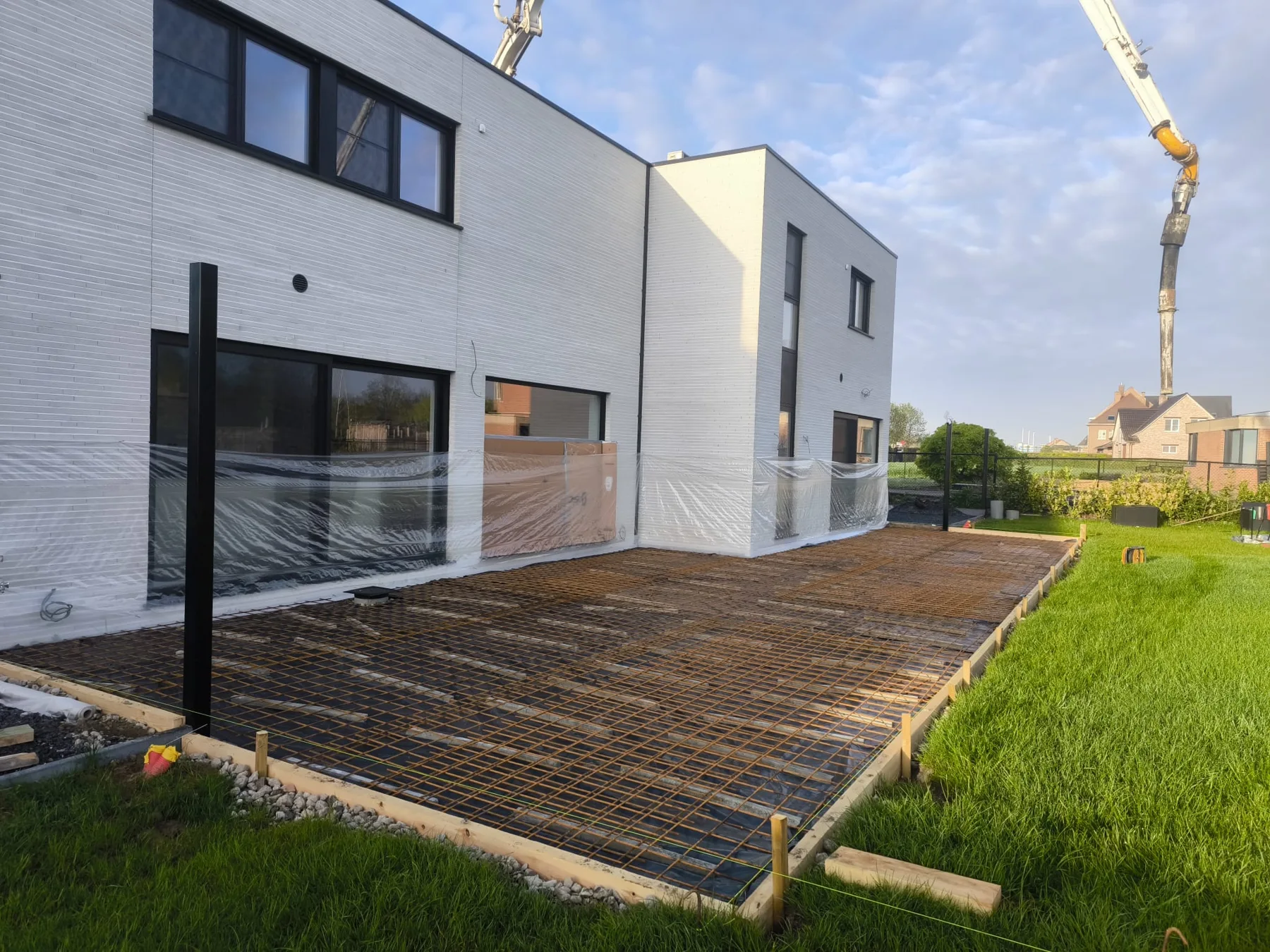
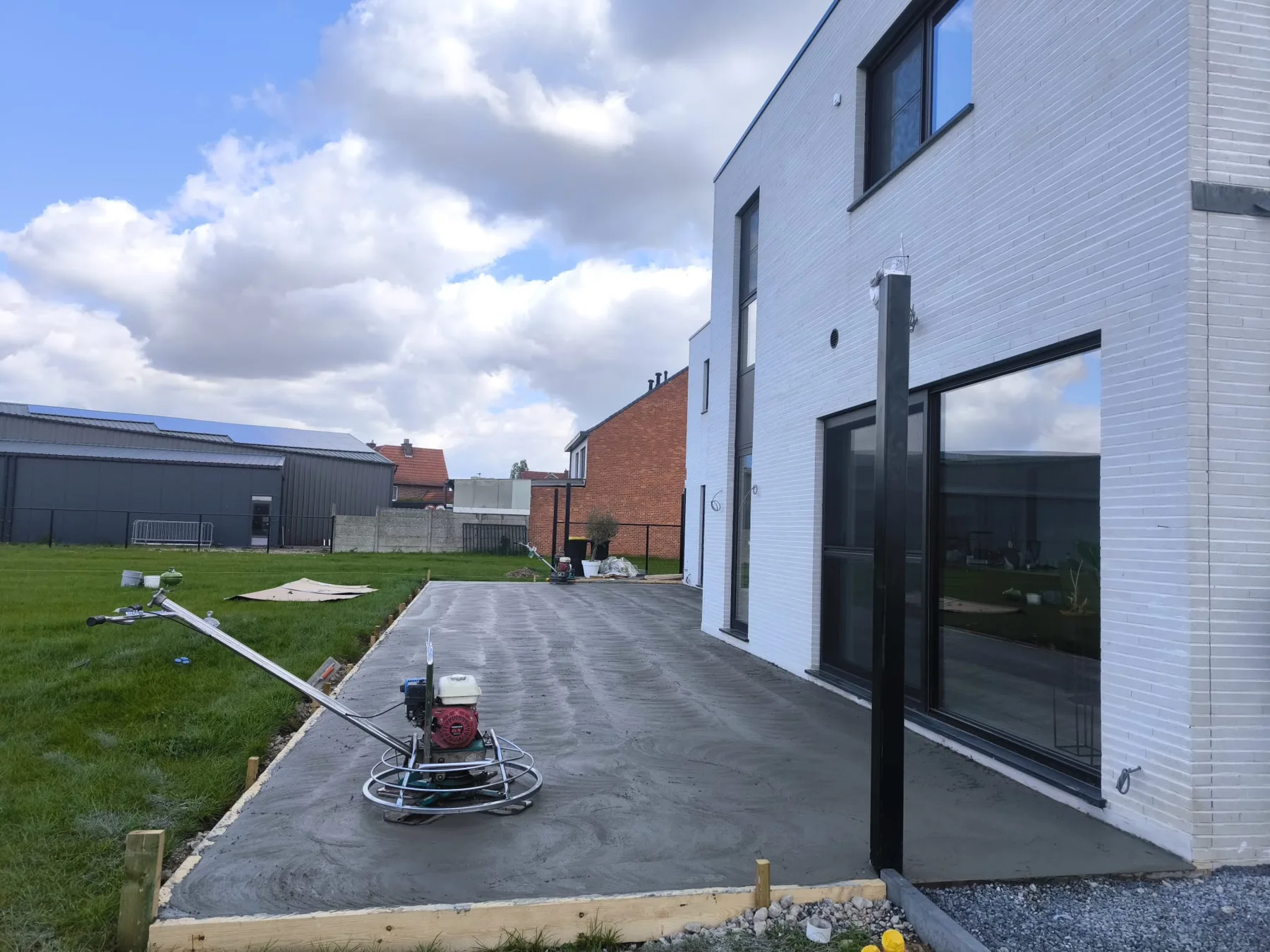
From a prepared site
to a finished floor.
The concrete order is one step in the whole process. Formwork, reinforcement, delivery and finishing must be coordinated. These site photos from Budingen show the preparation and execution.
Frequently asked questions about ordering concrete
Is C35/45 sufficient information for an order?
No. Also provide the usage domain, exposure class, fluidity, aggregate size and any additional requirements. The table above shows how these data together form a concrete order.
How much concrete do I need for 100 m²?
That depends on the thickness. At 20 cm the net volume is 20 m³; at 12 cm it is 12 m³. Our calculator adds a standard reserve of 1 m³, so you will respectively get 21 m³ or 13 m³ as the order quantity.
Can I enter the thickness in centimetres?
Yes. In the concrete calculator choose per dimension meter, centimetre or millimetre. The result is always in m³. When switching units, the entered dimension remains unchanged.
Do I need to order the pump separately?
That depends on the agreement with the supplier and the site manager. Confirm who will arrange the pump and which costs are included. Mention the distance to the pouring location and accessibility when placing your order.
Can Glansbeton also carry out the concrete floor?
For the execution of your concrete floor you can Glansbeton provide your plan, site address and desired finish. With this we can discuss your request and prepare a quote for the floor.
This is what you provide for the delivery
- The quantity of concrete and the agreed reserve.
- The complete concrete composition and desired finish.
- The site address, the delivery date and the time.
- The accessibility, the pump and any additional pipes.
With our concrete calculator calculate the net volume and the order quantity with 1 m³ reserve.
Having a concrete floor installed?
Send us your plan, the site address and the desired finish. We will review the execution of your concrete floor together.
Request a quote